


Many years ago, the late C. Peter Wagner came up with an idea known as New Apostolic Reformation that was about many things but it was mainly a new structure built about “End Time Apostles” and featured many elements of what is known as Kingdom Now or Dominion theology. While there are many similarities to Pentecostalism, there are some important differences as well.
Light the Nations has many relationships with men and women of God that are commonly associated with the New Apostolic Reformation such as Dr. Randy Clark, Bill Johnson, and Heidi Baker. For the sake of clarity, there is no common theological framework to say, “we affirm,” so it is hard to say where one stands within the doctrinal context. However, there are some shared values among these ministries and Pentecostals. Yet, some strong disagreements such as Christian Reconstructionism and the Prosperity Gospel.
For the sake of understanding, I will focus on where we have agreement with Bethel Church in Redding that many view as the voice of the movement. However, there is elements that Bill Johnson would not agree with Eric Metexas or Lance Wallnau, for example.
At the core of the discussion become is there apostles today? My question is how we do define an apostle? If you mean governmental structure, the answer is no. If you mean those serve people, guide pastors and take the gospel to the “region beyond,” (2 Cor. 10:16) the answer is yes. Pentecostals have always believed in apostles in that way. A District Superintendent or State Overseer is basically an apostle who oversees pastors.
Are there prophets? If you are asking like Jeremiah or Zephaniah who speak against the nation for immorality? The answer is no. If you are asking if there are prophets that are men and women who call believers out of sin and into Christ? The answer is yes. Pentecostal have a long history of prophets in our midst such as Leonard Ravenhill, David Wilkerson, and Dick Mills. We just don’t call them “Prophet Ravenhill.”
 Healing, Revival, Holy Spirit
Like classic Pentecostals, those connected with Bethel have a strong emphasis on divine healing. This is probably the strongest shared value among everyone in this discussion. It is the belief that divine healing in integral to the gospel and the same blood that saves us, heals us. A major function of Jesus while on the earth was connected to healing the sick. The early church believed that healing was the evidence that Jesus was raised from the dead. Consider Acts 3:1-10.
The emphasis on revival is another common theme. While how it fleshes out might look different, both Pentecostals and those in the New Apostolic Reformation would agree that the Church should be growing both in scope and depth. Both groups would look to Azusa Street as the model for the outpouring of the Spirit. It is worth stating that all parties would view revival as the means of the Great Commission being completed as well.
A third common view would the focus on the Baptism of the Spirit or the Pentecostal experience. The gifts of the Spirit are a core value of all groups in the discussion. How they are administered and if praying in tongues is the evidence might be debated but the presence of the gifts themselves is common doctrine. There would be no room for cessationism in the room among NAR and Pentecostals.
Historically, there are been the ability for common vision for things such as gospel crusades, prayer rallies, and mobilizing for social concerns. It is reasonable to believe this will continue.

Yet, another worldview
What we don’t have is a similar vison for humanity. Most ministries connected with the New Apostolic Reformation hold to a form of Christian Reconstructionism that was made popular by R. J. Rushdoony. This view requires Theonomy. This is the belief that divine law will govern sinful societies. It is an extreme view of Calvinism which many Pentecostals, including Light the Nation rejects as false teaching. You hear it used as Kingdom Now, Dominionism or 7 Mountain Mandate. All of them are new names for the same old doctrine of Christian Reconstructionism.
While there are Pentecostal politicians such as John Ashcroft, Michele Bachmann, and Todd Starnes; the focus is not on building a Christian society in America; it is about being faithful witness for Christ in a dark world. The heart is to bring light to darkness and shine as disciplines of Jesus. The heartbeat of Pentecostal is completing the Great Commission and seeing people come to Jesus; not making a society that is “Heaven on Earth.”
There is also a difference is the area of deliverance. Ministries connected with NAR often believe in “inner healing” which is a mixture of worldly psychology with some out of context passages of the New Testament. Often they replace progressive sanctification with their “inner healing sessions.” A common belief among these groups is that a Christian can have a demon. Pentecostals, on the other hand, would state there is no biblical merit for this and rest in the doctrine of Finished work. For more information on this, see Can a Christian have a demon?
If you was to sum up the differences, it would be that Pentecostal are much more missional in worldview, while NAR tends to be more political in their perspective. One of the reason for this is a strong disagreement concerning eschatology in most cases. Pentecostals are normally of the conviction that we will be evacuated from the earth in the rapture of the Church while many NAR ministries have different perspectives.
Latter Rain & Resolution 16
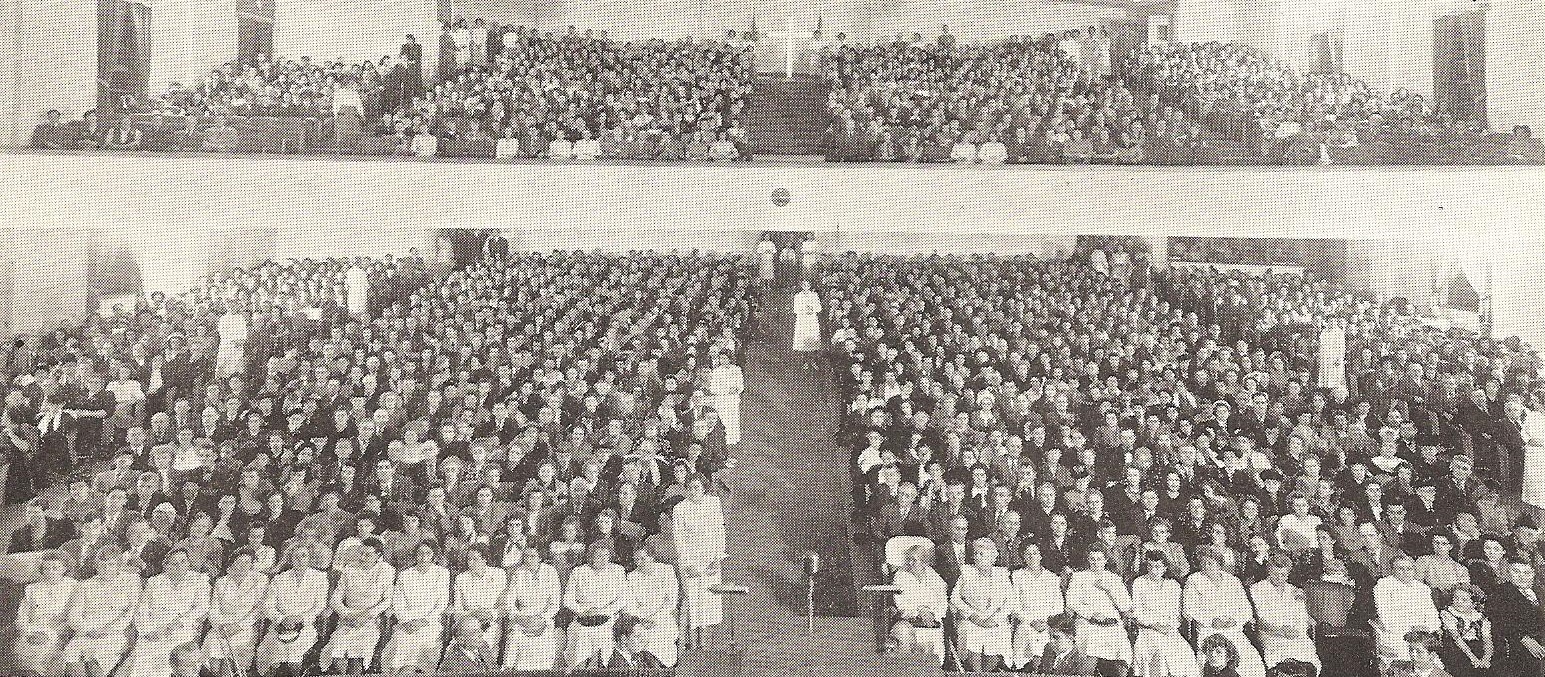
Any understanding of this question would require a visit to the Latter Rain revival in 1948 and the response of Pentecostal movements. In 1848, a move of God broke out in Canada but was quickly overcome with questionable teachings that caused the Assemblies of God (and others) to condemn it. Some of these teachings included Manifested sons of God, impartation, hyper ecumenism, keeping of Jewish feasts, and extra-biblical views on spiritual warfare. Within a year, it has spread across Minnesota and the northern states. A bible school in New York began the center of promoting Latter Rain ministry to the nations. The largest church that was part of the movement is now known as Brooklyn Tabernacle in New York City.
Many years later, the Assemblies of God considered what was known as Resolution 16 and they formed a response to it. In that, they questioned uses of some teaching in the churches. These included five teachings of concern: impartation, Apostolic government, personal prophecy, bad hermeneutics, and generation curses. They name some teachings such as Kingdom Now, Joel’s Army, spiritual warfare, prosperity, soul travail, and curses. (You can read it here.)
Light the Nations sees the value in personal prophecy and impartation but is fully aware that abuses of both exist in churches today. Prophecy is an important function of any Pentecostal ministry but must be done within biblical parameters.


